
Matthew 5–7: The Chapters That Raised Me | A Childhood Shaped by the Sermon on the Mount

Matthew 5–7: The Chapters That Raised Me
There are certain memories that time never quite manages to erase. They wait patiently beneath the surface of our lives until an ordinary evening, without invitation or warning, brings them rushing back with remarkable clarity.
Tonight was one of those evenings.
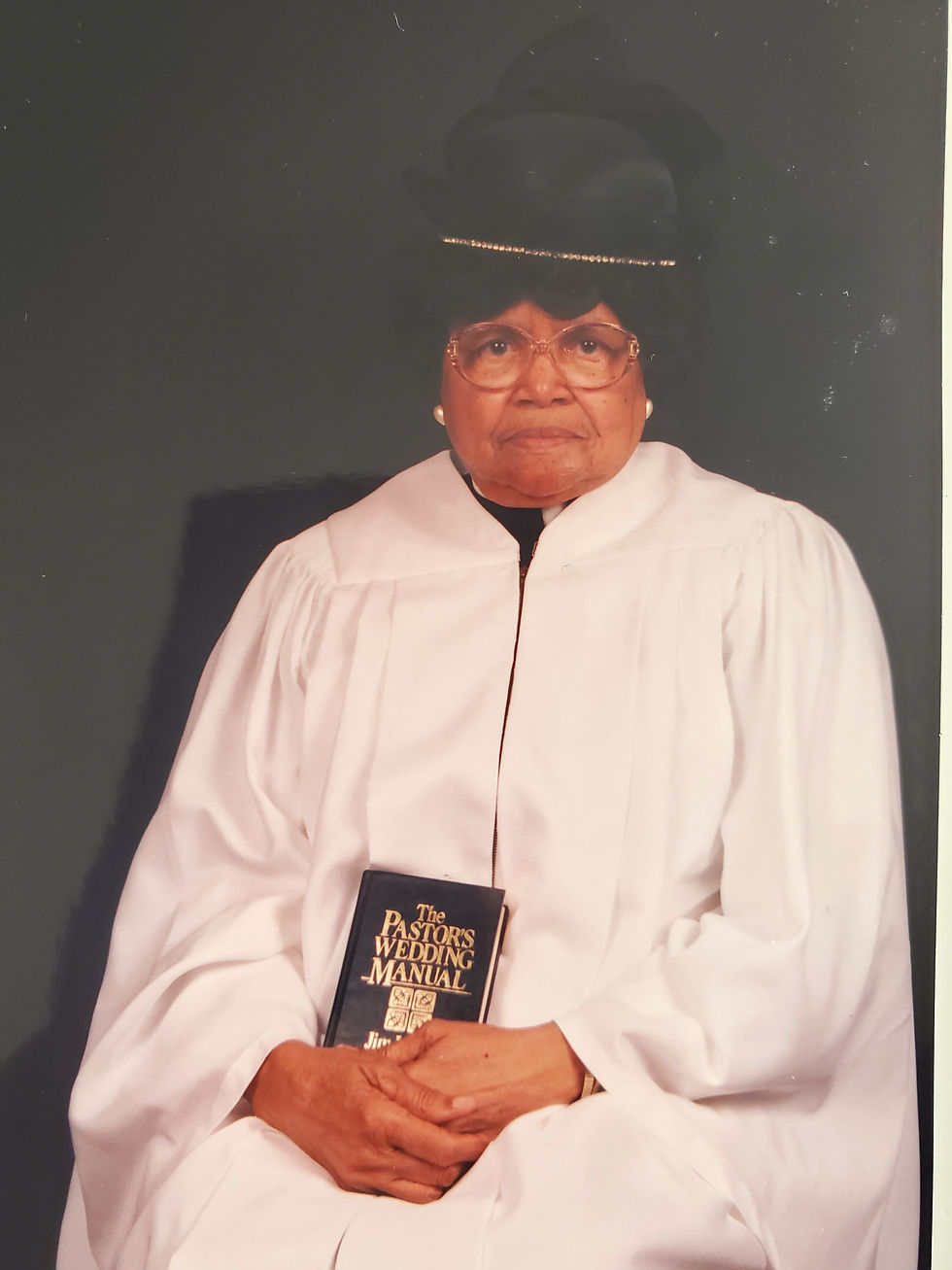
As I sat quietly reflecting, my thoughts drifted to my childhood in the House of God. It wasn't a particular sermon that came to mind or even a specific Sunday morning. Instead, I found myself thinking about Aunt Carrie and the quiet discipline she expected from every child who came under her care.
For us, learning the books of the Bible was never considered an accomplishment. It was only the beginning. Genesis through Revelation was simply the foundation upon which something much greater would be built. We were expected to know the Scriptures themselves.
Aunt Carrie believed that if the words of Christ were worth hearing, they were worth remembering. So she gave us an assignment that, looking back now, seems almost unimaginable for a room full of children. We were to memorize Jesus' Sermon on the Mount not a favorite verse or a familiar passage, but Matthew chapters five, six, and seven in their entirety.
At the time, we never questioned it. Children rarely question the standards they are raised with. We simply opened our King James Bibles and began learning, one verse at a time, until eventually the words no longer belonged to the page. They belonged to us.
Of course, our motivation had very little to do with spiritual maturity. We were children. We wanted to pronounce every word correctly. We wanted to stand confidently before the congregation. More than anything, we wanted the approving smile from Aunt Carrie and the quiet praise that followed when we had recited every verse without hesitation.
There was a certain pride that came with doing it well. Looking back, I can admit that without any embarrassment. We loved hearing the adults say, "That child knows the Word." We loved the applause. We loved the recognition. We loved knowing that all the hours of practice had paid off.
By the time many of us reached our early teenage years, standing before a congregation no longer felt intimidating. We had learned to project our voices, to articulate every word with confidence, and to speak without fear. At thirteen years old, many of us had already become young orators, though we would never have called ourselves that. We simply thought we were doing what every child in church was supposed to do.
What we did not realize was that Aunt Carrie was teaching us far more than public speaking. She was giving us a vocabulary that would sustain us long after childhood had passed.
I often smile when I think about how difficult those passages were to memorize. We learned them from the King James Version, with its majestic language and unfamiliar cadence. Every "thee," every "thou," every "verily," every carefully placed phrase demanded patience and repetition. It was not easy, especially for children.
Years later, after I had grown into adulthood, I bought an NIV Bible. I've had it for nearly twenty-eight years now. Its binding is worn, several pages have worked themselves loose over the years, and little pieces of paper are still tucked safely between its covers. I have never taped the pages back together.
I suppose those worn pages have become part of its story, just as they have become part of mine.
As much as I have appreciated reading other translations, my heart has never wandered very far from the King James Bible. It is the language of my childhood. It is the language through which I first heard the teachings of Jesus. Even now, when certain passages come to mind, they arrive exactly as Aunt Carrie taught them.
As the evening continued, I found myself quietly walking through the Sermon on the Mount almost without realizing it.
The Beatitudes.
Blessed are the poor in spirit.
Blessed are the meek.
Blessed are the merciful.
As a little girl, they were simply verses to remember. As a woman, they became virtues to pursue.
Then came the reminder that we were to be the salt of the earth and the light of the world. At the time, those were beautiful images that captured my imagination. Today, I understand them as responsibilities.
Jesus spoke about anger before it became murder. He spoke about purity before it became adultery. He spoke about integrity before it became broken promises.
He was not merely giving commandments. He was teaching us that character is formed long before anyone else sees the outcome.
There was one section, however, that challenged me then and still causes me to pause now.
"An eye for an eye." I smile every time I reach those verses because I know what follows. Love your enemies. Pray for those who despitefully use you. As a child, I could recite those words without hesitation. Living them has been the greater lesson.
Matthew chapter six always brings me back to prayer.
We prayed the prayer Jesus taught His disciples so often that its words became part of the rhythm of my life. Even today, I cannot begin to count the number of times those familiar lines have found their way into my conversations with God.
I confess, I roll my eyes a little when I hear some of today's prayers. Somewhere along the way, "Father God every other word like 50 11 million times in 5 minutes" seems to have become the opening phrase repeated over and over again. Perhaps every generation develops its own language. Mine will always return to, "Our Father which art in heaven..."
Every life has a code. Some people build theirs around success. Others around security, influence, or wealth. Mine was written long before I understood what it meant. It was hidden inside one verse that Aunt Carrie insisted we memorize.
Matthew 6:33.
"But seek ye first the kingdom of God, and his righteousness; and all these things shall be added unto you."
Looking back now, I realize that verse became the code to my life. It unlocked every season, every difficult decision, every closed door, and every unexpected blessing. I didn't always understand where God was leading me, but I always knew the order. Seek Him first. Everything else comes after.
As my thoughts wandered into Matthew chapter seven, I found myself smiling once again.
Ask.
Seek.
Knock.
How many times had we repeated those words as children without truly understanding their invitation?
Then came the narrow gate.
As I look back over my life, I sometimes laugh and think those verses taught me something very simple: when everyone seems determined to travel one road, I am definitely going the other way.
And then there were the warnings about false prophets.
Those words have taken on an entirely different meaning with age. Experience has a way of illuminating Scriptures that once seemed distant. Life eventually introduces you to the very people Jesus warned us about. But of course it takes a few life lessons before you realize Yeah, Ok, Enough.
Finally, there was the story of the wise man and the foolish man who built their houses.
As children, we memorized the lesson. As adults, we live it. Storms have a remarkable way of revealing foundations.
Sitting here tonight, I realized that what I remembered most was not simply the Scripture itself. I remembered the people who loved us enough to make sure we learned it.
Jesus taught the multitudes.
Aunt Carrie taught us.
My mother and my father, Deacon and Deaconess Stevenson, taught us. My father, whom everyone affectionately called the "Preaching Deacon," loved the Scriptures with his whole heart. Deacon Hardy taught us. Deacon Mingo taught us. Deacon Hicks taught us. Deacon Wright taught us. Deacon Thornton taught us. Reverend Palmer taught us.
Each generation faithfully handed the Word to the next, believing that one day we would understand what we could only recite as children.
They were right. Time became our greatest teacher. The verses that once earned applause eventually became the principles that guided our lives.
Looking back now, I realize Aunt Carrie was never asking us simply to memorize three chapters of the Bible. She was placing the words of Christ into our hearts, trusting that life itself would one day explain them.
And Life did.
Comments